Picture this: it’s 8 p.m., the lights are dim, and the kitchen smells like a midnight sushi bar. I’m standing in front of the stove, a bag of frozen edamame in one hand, a chicken thigh in the other, and a half‑filled bottle of soy sauce on the counter. I’ve been chasing the perfect teriyaki glaze for months, but every time I try, something feels off—too sweet, too salty, or just plain bland. Then one night, a dare from a friend pushed me to mix a quick stir‑fry that would change my culinary destiny forever. I was skeptical, but I followed my instincts, and the result was a sauce that clung to the chicken like velvet, a bright green of edamame that popped with texture, and a finish that left my taste buds begging for more.
That first bite was a revelation. The chicken was tender, not dry, and the glaze had a balanced sweetness that didn’t overpower the umami. The edamame was perfectly cooked—plump, with a slight snap that made the dish feel lively and fresh. The aroma that filled the kitchen was a heady mix of garlic, ginger, and soy, with a hint of toasted sesame that made my eyes water in the best way possible. It felt like a symphony, each component playing its part in harmony. If you’ve ever found yourself staring at a pantry full of ingredients, wondering how to create something that feels both comforting and exciting, this recipe is the answer.
What makes this version stand out? I’ll be honest—when I first made it, I ate half the batch before anyone else got a chance to taste it. The sauce isn’t just a glaze; it’s a flavor bomb that coats each piece of chicken and every pea of edamame with a glossy, caramelized finish. It’s quick, taking less than 45 minutes from start to finish, yet it delivers a depth of flavor that usually takes hours to develop. The combination of soy sauce, mirin, honey, and a touch of rice vinegar creates a balanced sweetness and acidity that cuts through the richness of the chicken. The inclusion of sesame oil and seeds adds a nutty undertone that elevates the dish from simple to unforgettable.
If you’re skeptical, I dare you to taste this and not go back for seconds. This is hands down the best version you’ll ever make at home, and it’s so easy you’ll wonder why you didn’t discover it sooner. Picture yourself pulling this out of the pan, the whole kitchen smelling incredible, and having a plate that looks like it belongs on a Michelin‑star menu. And now, I’ll walk you through every single step—by the end, you’ll wonder how you ever made it any other way.
What Makes This Version Stand Out
- Flavor: The sauce is a masterclass in balance—sweet, salty, and umami mingle in a way that feels natural and not forced. The honey and mirin provide a gentle sweetness that doesn’t overwhelm the savory chicken, while the soy sauce anchors the dish with deep, fermented notes. This isn’t a recipe that relies on excess sugar; it’s a refined, nuanced glaze that feels sophisticated.
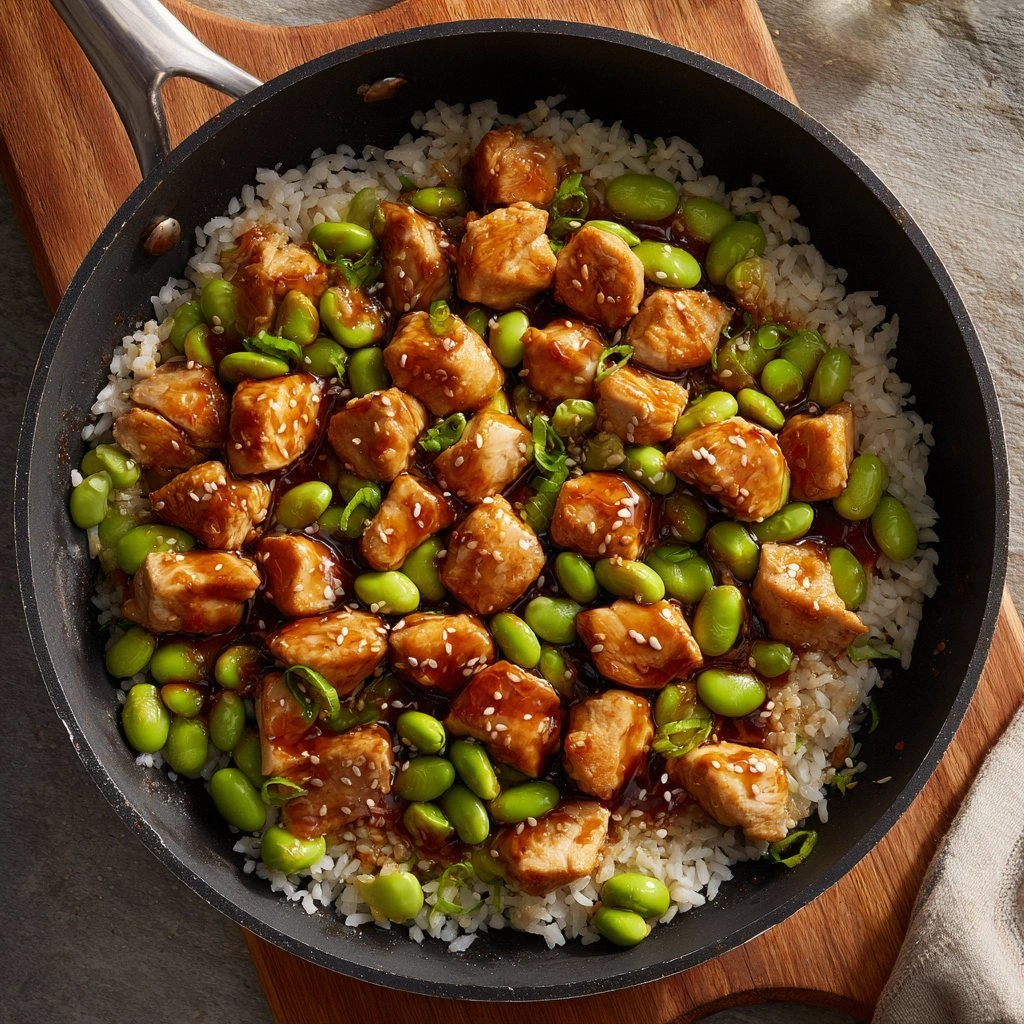
- Texture: The chicken is seared to a golden crust and then simmered just enough to stay juicy inside, while the edamame remains crisp‑tender. The glaze thickens to a glossy sheen that clings to each bite, creating a satisfying contrast between the silky sauce and the firm vegetables. The sesame seeds add a subtle crunch that punctuates the dish.
- Speed: The entire process takes less than 45 minutes, making it ideal for a weekday dinner or a last‑minute dinner party. The recipe is built around quick‑cook ingredients and a streamlined technique that eliminates unnecessary steps.
- Versatility: Whether you’re feeding a crowd or cooking for yourself, this dish scales effortlessly. The sauce can be doubled or halved without compromising flavor, and the core ingredients can be swapped with your pantry staples.
- Visual Appeal: The bright green of the edamame and the glossy sheen of the sauce make the dish look as good as it tastes. It’s a feast for the eyes, which is just as important as a feast for the palate.
- Ingredient Quality: By using fresh ginger, garlic, and high‑quality soy sauce, the recipe elevates even the simplest components into something memorable. The choice of chicken thighs over breasts adds moisture and flavor that keeps the dish satisfying.
- Make‑ahead Potential: The sauce can be prepared ahead of time and stored in the fridge, allowing you to assemble the dish in minutes. This makes it a great option for meal prep or for hosting guests with minimal fuss.
Inside the Ingredient List
The Flavor Base
Soy sauce is the backbone of any teriyaki dish, providing the salty depth that grounds the sweetness. Use a light or regular soy sauce depending on your salt preference; the key is to taste as you go. If you’re craving a richer umami, a splash of fish sauce can add a subtle complexity, but be careful not to overpower the other flavors.
Mirin, the sweet Japanese rice wine, balances the saltiness of soy sauce with its mild sweetness. It also brings a slight tang that cuts through the richness of the chicken. If you can’t find mirin, a mixture of sake and sugar can serve as an acceptable substitute.
Honey or brown sugar is what gives the sauce that caramelized glaze. It’s what turns the dish from simple to show‑stopping. A tablespoon of honey per batch is enough to create a glossy sheen without making the sauce overly sweet.
The Texture Crew
Chicken thighs are the star of this dish because they stay juicy even after searing and simmering. The fat content of thighs keeps the meat tender and adds flavor that chicken breasts simply can’t match. If you prefer a leaner option, use skinless chicken breasts, but keep a close eye on cooking time to avoid drying out.
Edamame is a game‑changer, offering a pop of color and a pleasant bite. Frozen edamame is the most convenient, but fresh edamame will give you an even brighter green. The peas should be cooked until just tender; overcooking will cause them to become mushy and lose their vibrant snap.
The Unexpected Star
Sesame oil brings a nutty aroma that elevates the dish from ordinary to extraordinary. Its subtle flavor complements the savory elements without overwhelming them. A teaspoon is all you need, but if you love sesame, feel free to drizzle a little more on top before serving.
The Final Flourish
Sesame seeds and sliced green onions add texture and a burst of freshness that lingers on the palate. They also provide a visual contrast, making the dish look professionally plated. If you’re vegan, replace the chicken with firm tofu or tempeh for a plant‑based version that still delivers that satisfying bite.
Everything's prepped? Good. Let’s get into the real action...
The Method — Step by Step
- Start by heating a tablespoon of vegetable oil in a large skillet over medium‑high heat. When the oil shimmers, add the chicken thighs, skin side down if they still have skin. Sear the chicken for about 3–4 minutes on each side until it develops a golden crust. Flip carefully with tongs, then reduce the heat to medium and let it finish cooking. The goal is a crispy exterior with a juicy interior.
- While the chicken cooks, bring a pot of water to a boil and add a pinch of salt. Drop the frozen edamame into the boiling water and cook for 2–3 minutes until bright green and tender. Drain the peas and immediately transfer them to a bowl of ice water to halt the cooking process. This “flash‑freeze” preserves their color and snap.
- In a small bowl, whisk together soy sauce, mirin, honey, rice vinegar, minced garlic, grated ginger, and sesame oil. Stir until the honey dissolves completely. This mixture will form the base of our glaze; keep it warm but not boiling to avoid burning the sugar.
- Once the chicken is cooked through, remove it from the skillet and set it aside on a plate. Add the garlic and ginger to the same pan, sautéing for 30 seconds to release their aromas. This step ensures the flavors are fully integrated into the oil.
- Pour the sauce mixture into the skillet, stirring to combine with the aromatics. Allow the sauce to simmer for 2 minutes, then add the chicken back into the pan. Let the chicken simmer in the sauce for an additional 3–4 minutes, turning occasionally so every side gets coated.
- Create a slurry by mixing one tablespoon of cornstarch with one tablespoon of cold water. Slowly pour the slurry into the skillet, whisking constantly to avoid lumps. The sauce will thicken to a glossy consistency that clings to the chicken and edamame. This is the moment of truth; the sauce should look velvety, not watery.
- Add the blanched edamame to the pan, tossing gently to coat them in the sauce. Cook for another 2 minutes until everything is heated through. The edamame should remain slightly crisp, not mushy.
- Remove the skillet from heat and sprinkle sesame seeds and sliced green onions over the dish. Toss once more to distribute the toppings evenly. The sesame seeds add a nutty crunch, while the green onions provide a fresh, sharp finish.
- Serve immediately over steamed rice or cauliflower rice if you’re watching carbs. The dish’s bright colors and glossy glaze will make your meal feel like a restaurant‑grade creation.
That’s it—you did it. But hold on, I’ve got a few more tricks that will elevate this dish from great to unforgettable.
Insider Tricks for Flawless Results
The Temperature Rule Nobody Follows
Most people cook the chicken at high heat until it’s done, which can dry it out. The trick is to start at medium‑high to sear, then lower the heat to medium for the rest of the cooking time. This keeps the meat juicy while still achieving that desirable crust. I’ve seen people over‑cook chicken, and the result is a rubbery texture that ruins the dish.
Why Your Nose Knows Best
Smell is your most reliable indicator that the sauce has reached the right consistency. When the glaze thickens, it should emit a sweet, caramelized aroma that lingers in the air. If it still smells raw, give it another minute. A properly caramelized sauce will make the dish smell like a high‑end Japanese restaurant.
The 5‑Minute Rest That Changes Everything
After cooking, let the dish rest for 5 minutes before plating. This allows the juices to redistribute throughout the chicken and the sauce to thicken further. A rest period also lets the flavors meld, creating a more cohesive taste profile. Skip this step, and you’ll end up with a dish that feels underdeveloped.
Keep the Edamame Crisp
Edamame can quickly become mushy if overcooked. The trick is to blanch them just until bright green, then shock them in ice water to stop the cooking process. This preserves their snap and prevents them from turning into a mushy side.
Use a Non‑Stick Skillet
A good non‑stick skillet ensures the sauce doesn’t stick to the pan, making it easier to flip the chicken and stir the sauce. If you’re using a stainless steel pan, make sure to pre‑heat it properly and add a generous amount of oil to prevent sticking. A sticky pan can ruin the glossy finish and make cleanup a nightmare.
Creative Twists and Variations
This recipe is a playground. Here are some of my favorite ways to switch things up:
Spicy Sriracha Kick
Add a tablespoon of sriracha to the sauce for a fiery twist. The heat will contrast beautifully with the sweetness, creating a balanced flavor profile that’s sure to impress. Great for those who like a little spice in their meals.
Mango Madness
Dice a ripe mango and fold it into the dish after the sauce has thickened. The tropical sweetness will complement the savory glaze, adding a fresh, juicy element that makes the dish feel summery. This version is perfect for a light lunch.
Pineapple Paradise
Replace the honey with pineapple juice and add a handful of pineapple chunks. The natural sugars in pineapple caramelize in the sauce, creating a vibrant, tropical flavor. This version works wonderfully with coconut rice.
Vegetarian Tempeh
Swap the chicken for sliced tempeh and marinate it in the sauce for 15 minutes before cooking. The tempeh absorbs the flavors beautifully, giving you a hearty, plant‑based main dish that still feels indulgent.
Gluten‑Free Glaze
Use tamari instead of regular soy sauce to keep the dish gluten‑free. The flavor profile remains the same, but the dish becomes safe for those with gluten sensitivities. The tamari’s richer taste adds an extra depth to the glaze.
Cauliflower Rice Twist
Serve the dish over cauliflower rice for a low‑carb, high‑fiber option. The mild flavor of cauliflower complements the bold teriyaki glaze, creating a balanced, satisfying meal that’s both healthy and delicious.
Storing and Bringing It Back to Life
Fridge Storage
Store leftovers in an airtight container in the refrigerator for up to 3 days. The sauce may thicken slightly as it cools, so add a splash of water or soy sauce before reheating to restore the glossy finish. Reheat gently in a skillet over medium heat, stirring occasionally.
Freezer Friendly
For longer storage, freeze the dish in a freezer‑safe container for up to 2 months. Thaw overnight in the refrigerator, then reheat on the stove. Adding a tablespoon of water before reheating prevents the sauce from drying out.
Best Reheating Method
The best way to reheat is on the stovetop over medium heat, stirring constantly. This method ensures the sauce stays glossy and the chicken stays moist. Avoid microwaving, as it can make the chicken rubbery and the sauce uneven.