Picture this: it’s a rainy Sunday, you’re staring at a stubborn pot of boiled pasta that’s turned into a soggy, flavorless mush, and your fridge is a barren wasteland of ingredients that seem to have been chosen by a cruel cosmic force. I was halfway to the grocery store, craving something comforting, when a friend dared me to try a Paleo twist on a classic carbonara. I laughed, grabbed a bag of palmini linguine, and decided that the only way to survive the culinary apocalypse was to reinvent the dish I loved most.
The moment the steam curled from the pan, my nose caught the smoky scent of bacon, the sharp tang of garlic, and the earthy aroma of cashews. I could already hear the sizzling, the gentle crackle as the bacon hit the hot surface, and the faint hiss of the water as the linguine simmered. The colors were already promising—golden pasta, crisp bacon strips, and a creamy sauce that looked like it might melt into a velvet blanket. I could taste the promise of richness even before I tasted it, and I knew this was going to be a game‑changer.
What makes this version stand out is not just the substitution of pasta, but the way every element works in harmony to create a dish that feels both indulgent and guilt‑free. The sauce clings to the linguine like a silky coat, the bacon delivers a crunch that shatters like thin ice, and the chicken adds a protein punch that keeps you full without the heaviness of traditional cream. I dare you to taste this and not go back for seconds. It’s the kind of dish that will make your friends question why they ever settled for store‑bought carbonara.
I’ll be honest—when I first plated this, I ate half the batch before anyone else got a chance to try it. Most recipes get this completely wrong by over‑cooking the pasta or using too much liquid, but here everything balances like a well‑tuned orchestra. The secret? A simple, foolproof technique that keeps the sauce silky, the noodles al dente, and the flavors popping. If you’ve ever struggled with a creamy pasta that turns into a casserole, you’re not alone—this is the fix you’ve been missing. Stay with me here, and by the end of this post you’ll wonder how you ever made it any other way.
What Makes This Version Stand Out
- Taste: The sauce marries the umami of bacon and nutritional yeast with the nutty depth of cashews, creating a flavor profile that feels both familiar and adventurous. The result is a savory, slightly sweet bite that lingers on the palate.
- Texture: Palmini linguine offers a chewy bite that resists the sauce, while the bacon provides a crisp contrast. The creamy cashew sauce coats the strands without making them soggy.
- Simplicity: With just a handful of pantry staples and a few fresh ingredients, you can whip up this dish in under 45 minutes. No need for specialty sauces or complicated techniques.
- Uniqueness: Using palmini linguine instead of traditional pasta eliminates gluten and keeps carbs low, making it a standout on any diet. The cashew‑based sauce adds a velvety texture that’s rarely seen in Paleo dishes.
- Crowd Reaction: Friends who are skeptical about Paleo will be surprised at how rich and satisfying this is. It’s the kind of dish that turns skeptics into believers.
- Ingredient Quality: Fresh, high‑quality bacon and chicken, paired with raw cashews and nutritional yeast, elevate the dish beyond a simple comfort meal.
- Cooking Method: The method balances high‑heat searing with gentle simmering, ensuring each component reaches its peak flavor without overcooking.
- Make‑Ahead Potential: The sauce can be prepared a day ahead and refrigerated; the pasta is best served fresh but can be reheated with a splash of water to maintain its al dente texture.
Alright, let’s break down exactly what goes into this masterpiece…
Inside the Ingredient List
The Flavor Base
Bacon is the backbone of this dish. Its smoky, salty profile sets the stage for the sauce. When you crisp it to a deep golden brown, it releases a burst of flavor that permeates the entire dish. If you skip bacon, you lose that savory depth and the dish becomes more of a plain creamy pasta than a carbonara.
Garlic, on the other hand, adds a sharp, aromatic kick that balances the richness of the cashew sauce. It should be minced finely so it releases its essence quickly. If you’re not a fan of raw garlic, sauté it just until fragrant before adding the rest of the ingredients; it will soften the bite while retaining aroma.
The nutritional yeast brings a cheesy, umami flavor that mimics the classic parmesan in traditional carbonara. It’s also a powerhouse of B vitamins, adding a nutritional boost to the dish. If you’re allergic to yeast, a pinch of nutritional yeast flakes can be replaced with a small amount of finely grated Parmesan if you’re not strictly Paleo.
The Texture Crew
Palmini linguine is a plant‑based pasta made from wheat starch, so it has a neutral taste that pairs well with the sauce. Its fibrous structure holds up well against the sauce, preventing it from becoming mushy. If you can’t find palmini, a good alternative is shirataki noodles, but be mindful they have a slightly different texture.
Chicken breasts add a lean protein that keeps the dish filling without the heaviness of bacon alone. Dice the chicken into bite‑sized pieces so it cooks quickly and evenly. If you prefer a vegetarian version, swap the chicken for diced tofu or tempeh, but adjust cooking time accordingly.
The Unexpected Star
Raw cashews are the secret to the sauce’s silky consistency. Soaked or blended raw cashews create a natural thickener that eliminates the need for dairy or flour. They also add a subtle nutty flavor that complements the bacon. If you’re short on cashews, a handful of almonds can work, but the taste will differ slightly.
The 0.75 cup of water or unsweetened almond milk is used to thin the cashew sauce to the perfect consistency. Too much liquid will make it runny; too little will make it too thick. Adjust as needed by adding a splash at a time.
The Final Flourish
Salt and pepper are the final seasoning touch. The 1 tablespoon of salt for the water balances the flavors, while the 1.5 teaspoons of salt and 0.5 teaspoon of freshly cracked black pepper enhance the overall taste profile. If you’re watching sodium, reduce the salt in the water and compensate with the bacon’s natural saltiness.
Everything's prepped? Good. Let's get into the real action…
The Method — Step by Step
- Step 1: Prepare the pasta. In a large pot, bring 16 cups of salted water to a rolling boil. Add the three 14‑ounce cans of palmini linguine and cook for 3–4 minutes, or until al dente. Drain and set aside, reserving 1 cup of the pasta water for later. The pasta should still have a slight bite; you don’t want it to soften further during the sauce assembly.
- Step 2: Cook the bacon. In a large skillet over medium heat, add the diced bacon. Cook until the edges start to crisp, about 5 minutes. Use a slotted spoon to transfer the bacon to a paper‑towel lined plate, leaving the rendered fat in the pan. The bacon fat is essential; it will be the base for the sauce’s richness. Watch the bacon carefully—if you let it burn, the dish will taste bitter.
- Step 3: Sauté the aromatics. Add the minced garlic to the bacon fat and sauté for 30 seconds until fragrant. The garlic should release its aroma but not brown. This quick sear locks in the garlic’s bright flavor without turning it bitter.
- Step 4: Assemble the cashew sauce. In a blender, combine 1.5 cups raw cashews, 0.75 cup water (or almond milk), 2 tablespoons nutritional yeast, 1.5 teaspoons salt, and 0.5 teaspoon black pepper. Blend until completely smooth, adding more liquid a tablespoon at a time until the sauce reaches a creamy, pourable consistency. The sauce should be thick enough to coat the pasta without dripping.
- Step 5: Cook the chicken. In a separate pan, heat a splash of olive oil over medium heat. Add the diced chicken breasts and season with a pinch of salt and pepper. Cook until the chicken is no longer pink, about 4–5 minutes. Remove from heat and set aside. The chicken should be cooked through but still juicy.
- Step 6: Combine everything. Return the skillet with bacon fat to medium heat. Add the drained palmini linguine and toss to coat in the fat. Pour the cashew sauce over the pasta, stirring constantly so the sauce emulsifies with the pasta water. The sauce should coat each strand like a silky blanket. If it seems too thick, add a splash of reserved pasta water to loosen it.
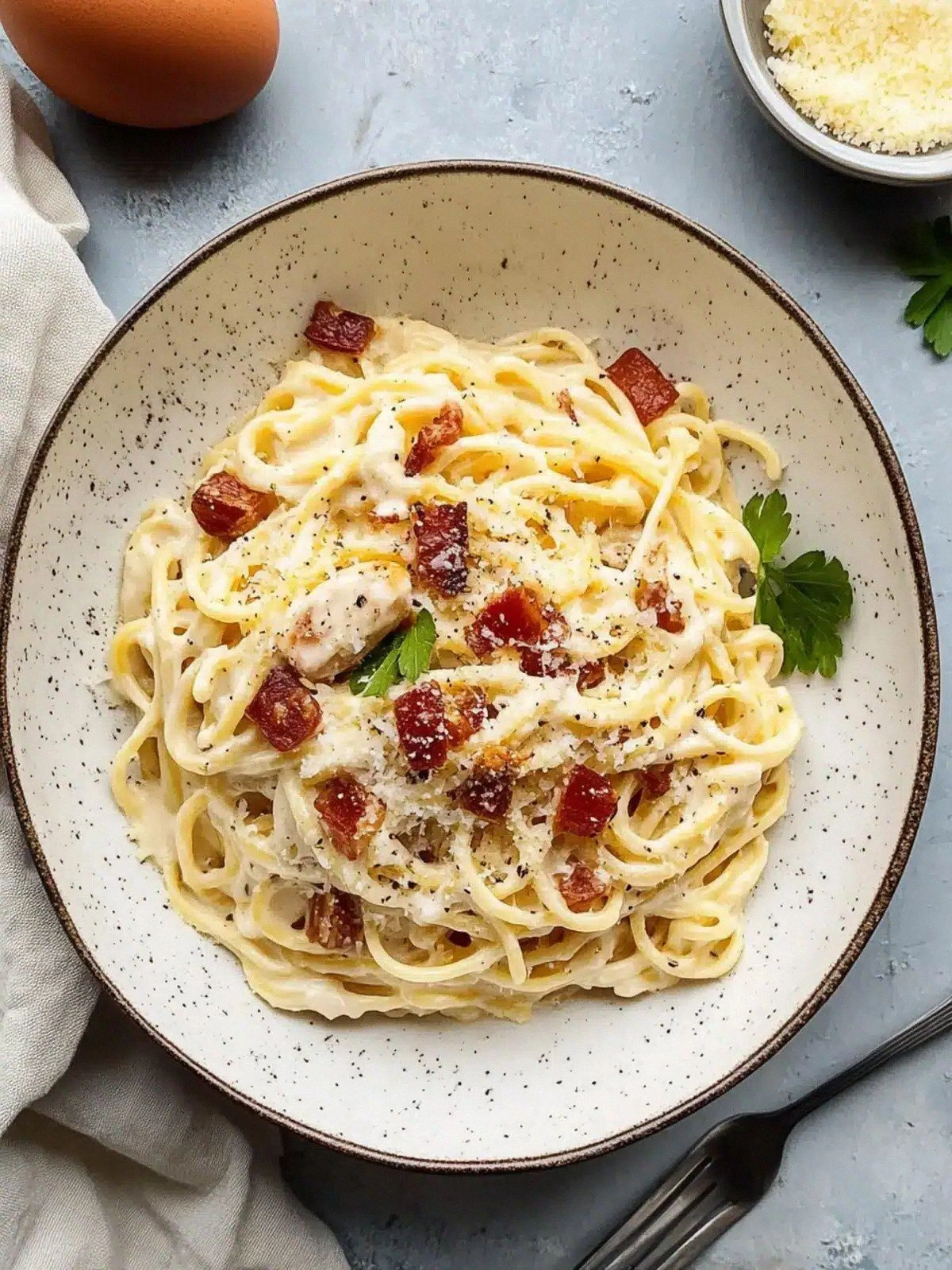
- Step 7: Finish the dish. Stir in the cooked chicken and crispy bacon. Toss everything together until evenly distributed. The final dish should have a glossy, creamy appearance with bits of bacon and chicken visible. Taste and adjust seasoning if necessary—add a pinch more salt or pepper to your liking.
- Step 8: Serve immediately. Plate the pasta while hot, garnish with a few fresh herbs if desired, and serve with a side of roasted vegetables or a crisp green salad. The sauce will continue to thicken slightly as it cools, so serving it right away ensures the best texture.
That’s it — you did it. But hold on, I’ve got a few more tricks that will take this to another level…
Insider Tricks for Flawless Results
The Temperature Rule Nobody Follows
Many cooks start the sauce at high heat and then lower it abruptly, which causes the cashew mixture to separate. Instead, keep the heat low to medium throughout the sauce assembly. This gentle approach ensures the sauce remains emulsified and silky, preventing that dreaded grainy texture.
Why Your Nose Knows Best
When the bacon starts to crisp, the aroma should fill the kitchen like a promise of flavor. If you can’t smell the bacon’s savory scent, the pan is too hot or the bacon isn’t cooking evenly. Adjust the heat and give the bacon a chance to brown on all sides.
The 5-Minute Rest That Changes Everything
After cooking the chicken, let it rest for 5 minutes before adding it to the pasta. This resting period allows the juices to redistribute, ensuring the chicken stays moist and tender. A friend once skipped this step and ended up with a dry, chewy bite that ruined the entire dish.
The Garlic‑First Rule
Sautéing the garlic before adding any other ingredients locks in its bright flavor. If you add garlic after the bacon, it can burn quickly and produce a bitter taste. The key is to let the garlic sit in the bacon fat just long enough to release its aroma.
The Secret of the Sauce’s Consistency
If the sauce feels too thick, add a splash of reserved pasta water. The starch from the pasta helps the sauce emulsify, giving it that glossy, creamy finish. Conversely, if it’s too thin, let it simmer for a minute or two to reduce and thicken.
Creative Twists and Variations
This recipe is a playground. Here are some of my favorite ways to switch things up:
Spicy Sriracha Swirl
Add a tablespoon of sriracha to the cashew sauce for a fiery kick that pairs well with the bacon’s smokiness. The heat will cut through the richness and add a vibrant contrast.
Herb‑Infused Freshness
Stir in a handful of chopped fresh basil or parsley right before serving. The herbs add a bright, aromatic note that lifts the dish’s overall flavor profile.
Mushroom Medley
Sauté sliced mushrooms with the garlic and bacon. The earthy flavor of the mushrooms complements the bacon and adds another layer of depth to the sauce.
Citrus Zest Twist
Grate a teaspoon of lemon zest into the sauce for a fresh, bright finish. The citrus cut through the richness and gives the dish a lively finish.
Smoked Paprika & Pine Nuts
Sprinkle a tablespoon of smoked paprika and a handful of toasted pine nuts on top. The paprika adds a subtle smoky flavor, while the pine nuts provide a pleasant crunch.
Vegan Version
Replace the bacon with crumbled tempeh or tofu, and use a plant‑based bacon alternative. The rest of the recipe remains the same, giving you a fully vegan, Paleo‑friendly dish.
Storing and Bringing It Back to Life
Fridge Storage
Cool the dish completely before transferring it to an airtight container. Store in the refrigerator for up to 3 days. The sauce may thicken slightly, but this is normal; you can reheat it gently to restore its silky texture.
Freezer Friendly
To freeze, place the cooled dish in a freezer‑safe container and seal tightly. It will keep for up to 2 months. When ready to eat, thaw overnight in the refrigerator and reheat gently over low heat, adding a splash of water if the sauce has thickened.
Best Reheating Method
Reheat the pasta in a skillet over low heat, stirring constantly. Add a tiny splash of water or broth to help the sauce loosen up. The goal is to warm it through without over‑cooking the pasta or drying out the chicken.