Picture this: a rainy afternoon, a stubborn mango that refuses to yield, and a kitchen that feels like a chemistry lab. I had just discovered a mango that was so ripe it practically begged for my attention, and I decided to turn that single fruit into a dessert that would make my friends question their own culinary limits. The aroma that escaped as I sliced the mango was a sweet, almost intoxicating perfume that danced in the air, while the bright orange flesh glistened like a promise of tropical bliss. I could hear the faint crackle of the stove as I prepared the base, and the sound of the blender whirring was almost a lullaby. I knew from the first bite that this would be a dish that would stay with you long after the last spoonful.
I was determined to create a mango panna cotta that did more than just melt in your mouth—it would sing a song of silky smoothness, a hint of citrus, and a subtle coconut crunch that would make every bite feel like a vacation. I wanted the texture to be so delicate that it would melt like a cloud, yet sturdy enough to hold a topping of crunchy coconut crumble that added a satisfying contrast. The flavors had to be balanced: the mango’s natural sweetness, the richness of coconut milk, the creaminess of heavy cream, and a splash of lime zest to cut through the indulgence. I also wanted to add an unexpected twist with tapioca pearls that would give the dessert a playful, chewy surprise. The result? A dessert that feels like a tropical sunset in a glass, with layers of flavor that unfold with each spoonful.
Most recipes for mango panna cotta get this completely wrong, either by overcooking the gelatin or by using too much sugar, which can drown the fruit’s delicate flavor. I dare you to taste this and not go back for seconds. The secret is in the harmony of ingredients and the precise timing of each step. I’ll be honest— I ate half the batch before anyone else got to try it, but the moment I realized the texture was flawless, I knew I had stumbled upon something truly special. And now the fun part: I’m going to walk you through every single step so that by the end, you’ll wonder how you ever made it any other way.
Let me walk you through every single step—by the end, you'll wonder how you ever made it any other way.
What Makes This Version Stand Out
- Flavor: The use of fresh, ripe mangoes ensures a natural sweetness that is far superior to canned fruit. The subtle hint of lime zest adds a bright counterpoint that keeps the dessert from feeling heavy.
- Texture: The combination of coconut milk and heavy cream creates a luxuriously silky mouthfeel, while the tapioca pearls add an unexpected chewy element that lingers pleasantly.
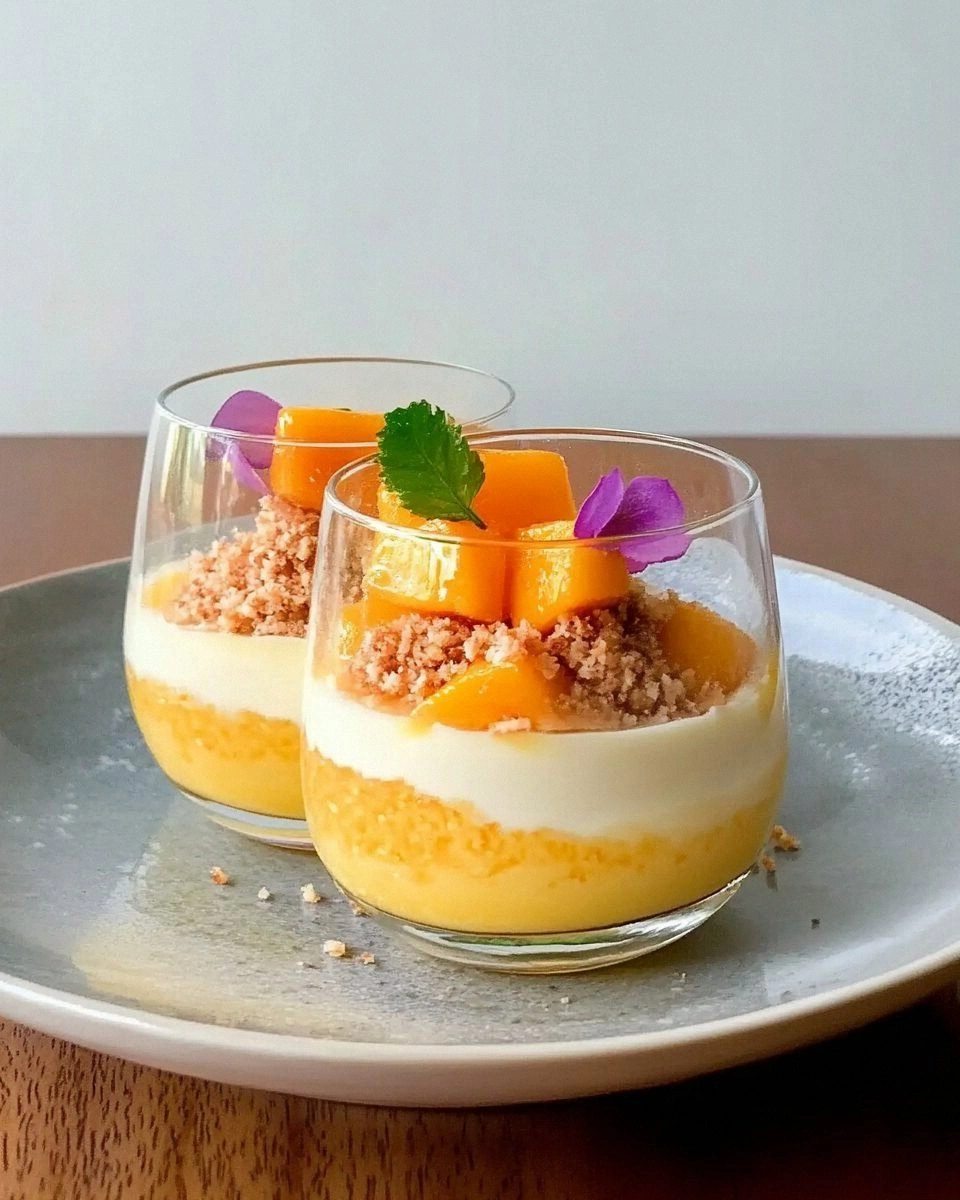
- Visual Appeal: The vibrant orange of the mango puree contrasts beautifully against the translucent coconut base, and the toasted coconut crumble on top gives a golden finish that looks as good as it tastes.
- Ease: Every step can be done in under an hour, making it a perfect dessert for last-minute entertaining or a spontaneous craving.
- Make‑Ahead: This panna cotta can be prepared up to 24 hours in advance, allowing you to focus on other parts of your meal while it sets.
- Ingredient Quality: The recipe relies on simple, high‑quality ingredients—fresh mangoes, full‑fat coconut milk, and a touch of sea salt—that elevate the dish without complicating the process.
- Versatility: Swap the coconut milk for almond milk or add a splash of rum for an adult version, and the dessert adapts seamlessly to your preferences.
Inside the Ingredient List
The Flavor Base
Fresh mangoes are the star of this dessert. Their natural sweetness and vibrant color provide a flavor foundation that is both sweet and slightly tart. The mangoes should be ripe but not overripe; a firm texture ensures the puree stays smooth without becoming mushy. If you can’t find ripe mangoes, look for ones that give slightly when pressed—they’ll be ready to transform into a silky base.
The Texture Crew
Coconut milk and heavy cream are the dynamic duo that gives the panna cotta its luscious mouthfeel. Coconut milk brings a subtle tropical flavor that complements the mango, while heavy cream adds body and richness. The gelatin, dissolved in cold water, is the binder that turns the liquid into a set, gel-like consistency. A pinch of sea salt is added to balance the sweetness and enhance the overall flavor profile.
The Unexpected Star
Tapioca pearls add an exciting textural element. When cooked to a translucent sheen, they provide a chewy surprise that contrasts with the silky panna cotta. They’re also a great way to add a touch of fun for kids and adults alike. If you prefer a completely dairy‑free version, simply omit the heavy cream and use coconut cream instead.
The Final Flourish
Coconut crumble topping is the finishing touch that adds crunch and a toasty, nutty flavor. Toast the coconut flakes until golden, then mix with a pinch of sugar and a little melted butter for extra richness. This topping not only adds texture but also a caramelized aroma that elevates the entire dish. Sprinkle it just before serving to keep the crunch intact.
Everything’s prepped? Good. Let’s get into the real action...
The Method — Step by Step
- Begin by simmering the tapioca pearls in a saucepan of water until they become translucent and slightly chewy, about 15 minutes. Drain and set aside; the pearls will absorb some of the mango puree later. While the pearls cook, blend the ripe mangoes into a smooth puree, reserving a small spoonful for garnish. This step ensures you have a thick, bright base that carries the mango flavor.
- In a small bowl, sprinkle powdered gelatin over 2 tablespoons of cold water and let it bloom for 5 minutes. This step is critical; if you skip the blooming, the gelatin may clump and ruin the smoothness of the panna cotta. Gently heat the bloomed gelatin over low heat until it dissolves completely, stirring constantly. Keep the mixture warm but not boiling to preserve the gelatin’s setting ability.
- Simmer coconut milk, heavy cream, and sugar in a saucepan over medium heat until the sugar dissolves. Add the vanilla extract and a pinch of sea salt, stirring to combine. The mixture should be warm but not boiling; a gentle simmer ensures the flavors meld without scorching the dairy.
- Slowly pour the warm coconut mixture into the mango puree, whisking continuously to avoid lumps. This is the moment of truth: the mixture should be silky and free of any gritty texture. As you whisk, you’ll see the mixture thicken slightly, indicating the gelatin is taking effect.
- Fold in the cooked tapioca pearls, allowing them to soak up some of the mango mixture. The pearls should retain their chewiness without becoming mushy. Stir gently to distribute them evenly; this ensures each spoonful has a balanced bite of fruit and texture.
- Divide the mixture evenly into four ramekins or serving glasses. Tap the ramekins gently on the counter to release any air bubbles. The ramekins should be filled about three-quarters full to allow room for the panna cotta to expand slightly as it sets.
- Refrigerate the ramekins for at least 4 hours, or overnight for best results. The gelatin will set, creating a firm yet creamy texture that holds its shape. During refrigeration, the flavors will meld, intensifying the mango and coconut notes.
- Just before serving, top each panna cotta with the toasted coconut crumble and a few fresh mango slices. The crumble adds a satisfying crunch that contrasts with the silky base. Serve chilled, and enjoy the tropical symphony of flavors.
That's it— you did it. But hold on, I've got a few more tricks that'll take this to another level...
Insider Tricks for Flawless Results
The Temperature Rule Nobody Follows
Gelatin works best when the mixture is warm, but not hot. If the mixture gets too hot, the gelatin can denature and lose its setting power. Keep the mixture between 70–80°F (21–27°C) before adding the gelatin, and always let it cool slightly after dissolving the gelatin before mixing.
Why Your Nose Knows Best
Smell the mixture as you go; a faint coconut aroma indicates the coconut milk has been incorporated properly. If the scent is weak, it may mean the milk didn’t fully emulsify, which can result in a watery texture. A strong, sweet mango scent also signals that the fruit has released its juices fully.
The 5-Minute Rest That Changes Everything
After you pour the mixture into ramekins, let them rest for 5 minutes before refrigerating. This short pause allows the gelatin to start setting slightly, reducing the risk of the mixture shifting during the long chill period. It also gives the tapioca pearls a moment to settle, preventing them from floating to the surface.
Use a Thermometer, Not a Guess
A digital kitchen thermometer is a game changer. It lets you monitor the exact temperature of the coconut mixture, ensuring you hit that sweet spot where the gelatin is active but not overheated. This precision eliminates the trial‑and‑error that often plagues dessert makers.
Serve with a Splash of Lime
Just before serving, drizzle a thin line of lime juice over each panna cotta. The acidity cuts through the richness and brightens the mango’s flavor. It also adds a fresh pop that makes the dessert feel lighter and more refreshing.
Creative Twists and Variations
Tropical Coconut Ice Cream Swirl
Swirl a scoop of coconut ice cream into the mango puree before adding the gelatin. The ice cream will melt into the mixture, giving the panna cotta a creamy, cold center that feels like a dessert on a hot day. This variation is perfect for summer gatherings.
Spiced Rum Infusion
Add 1 tablespoon of dark rum to the coconut mixture for an adult twist. The rum’s caramel notes pair beautifully with the mango’s sweetness, creating a dessert that feels both exotic and sophisticated. Keep the alcohol amount moderate to avoid affecting the gelatin’s setting.
Berry Mango Fusion
Blend a handful of fresh strawberries or blueberries with the mango puree. The berries add a tart contrast that brightens the overall flavor profile. This version is a great way to incorporate seasonal fruit into the classic recipe.
Almond Milk & Coconut Yogurt Version
Replace heavy cream with coconut yogurt for a dairy‑free alternative. The yogurt adds tanginess that balances the mango’s sweetness. This variation is ideal for vegans or those with dairy sensitivities.
Chocolate Ganache Drizzle
Melt dark chocolate with a splash of coconut milk and drizzle over the set panna cotta. The chocolate’s bittersweet flavor complements the tropical base, creating a dessert that satisfies both sweet and chocolate cravings.
Storing and Bringing It Back to Life
Fridge Storage
Store the panna cotta in the refrigerator for up to 48 hours. Keep the ramekins covered with plastic wrap or a lid to prevent the dessert from absorbing odors from other foods. When ready to serve, let the panna cotta sit at room temperature for 10 minutes to soften slightly before plating.
Freezer Friendly
For longer storage, wrap each ramekin tightly in plastic wrap and place it in a freezer bag. The dessert can be frozen for up to 2 weeks. When you’re ready to eat, thaw in the refrigerator overnight, then give it a gentle stir to restore its silky texture.
Best Reheating Method
If the panna cotta has become too firm, gently warm it in a double boiler over low heat, stirring occasionally. Add a splash of coconut milk or a few drops of water to help the mixture rehydrate. Once it reaches a creamy consistency, remove from heat and let it cool slightly before serving.